
Your needs, this model
Does it fit your priorities?
What does the Makita XPH12Z package include?
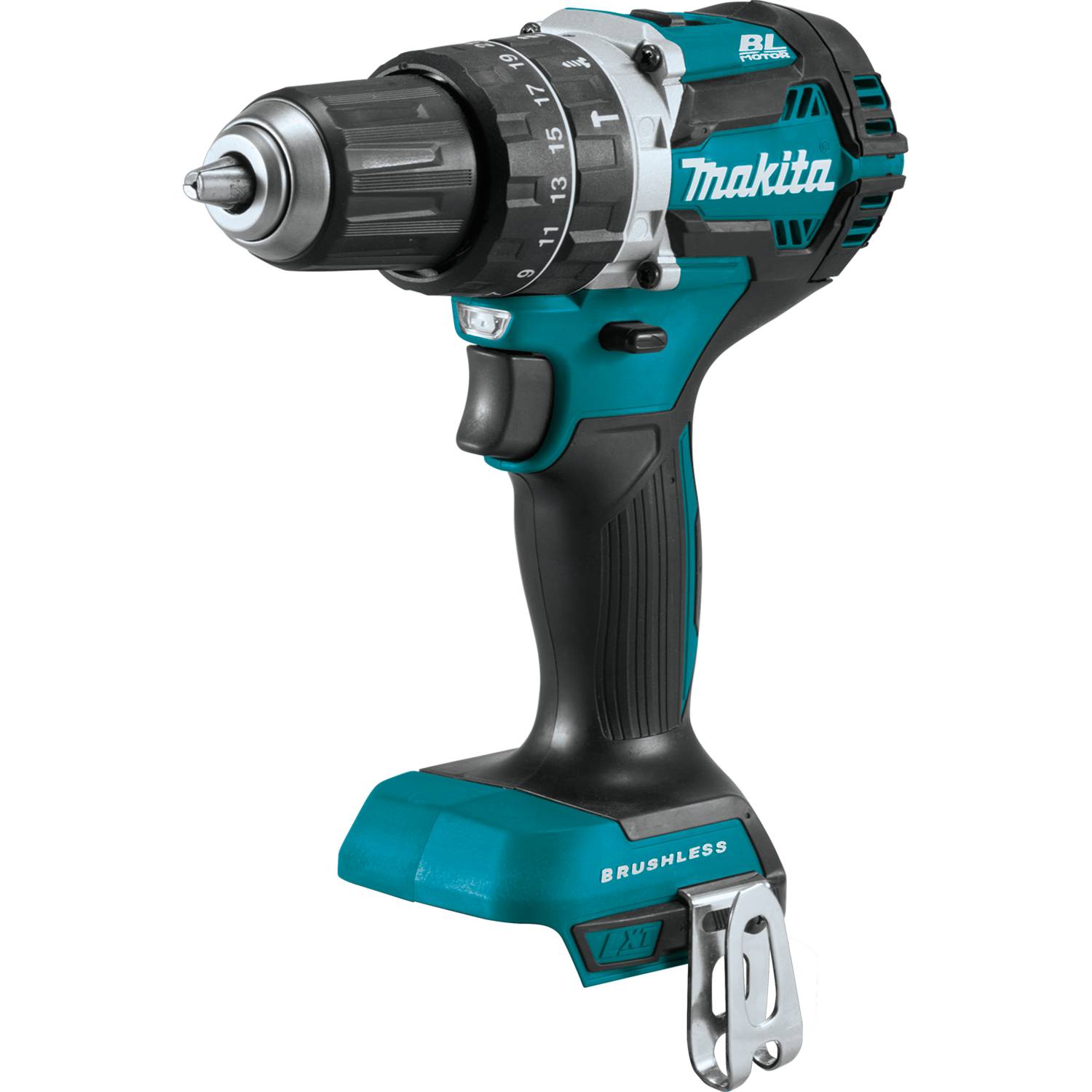
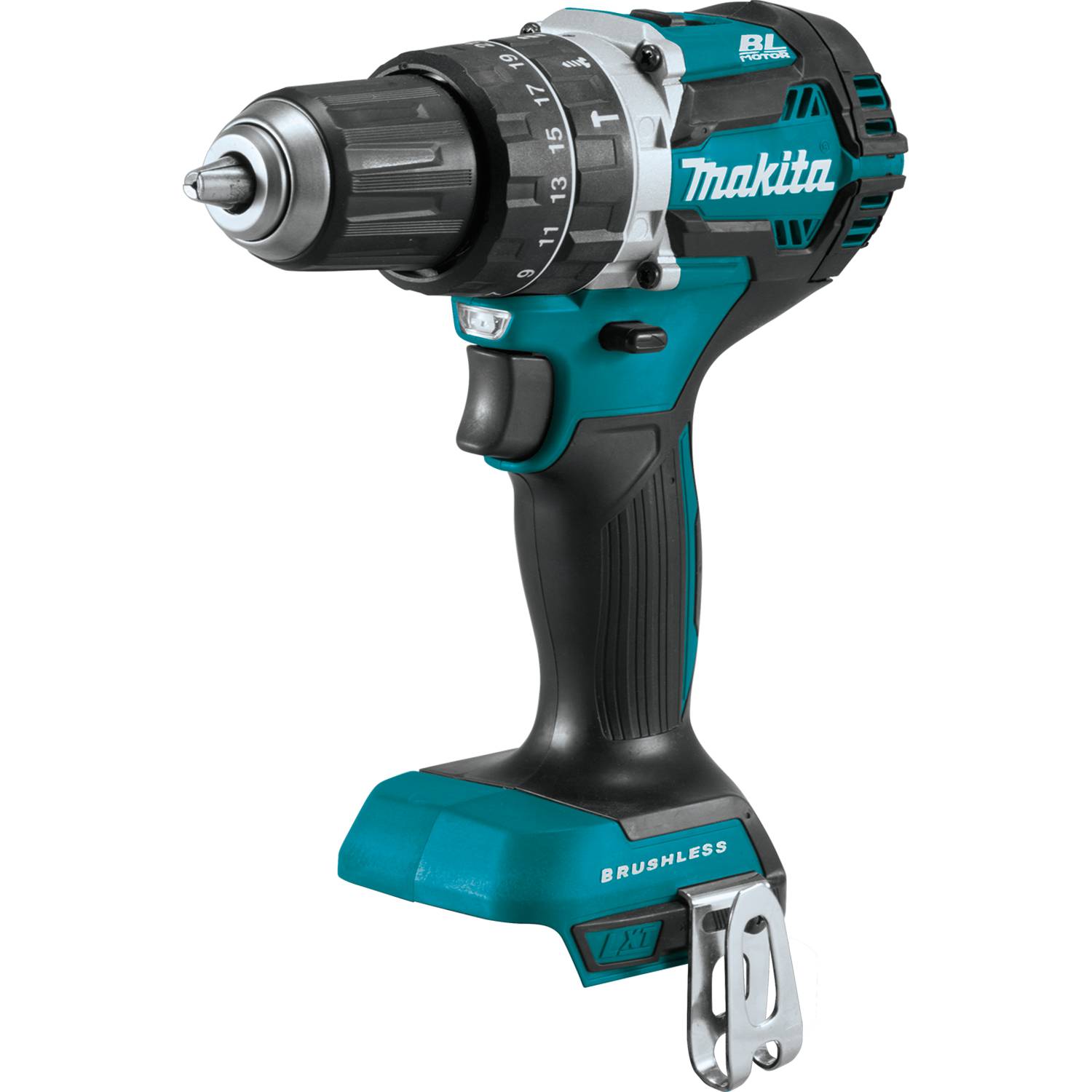
Makita labels the exact U.S. XPH12Z tool-only and explicitly excludes the battery and charger. Its separate XPH12T flyer lists two BL1850B 5.0Ah batteries, a DC18RC charger and a tool case for that kit; those items do not transfer to XPH12Z. A hook is visible in the XPH12Z image and listed in the family parts breakdown, but the manual calls it optional and the exact Z package text does not settle whether it is in the box.
Explore this need in the finder →Does the XPH12Z document a hammer-drilling mode?
Yes. The XPH12 manual documents hammer drilling as one of three modes and specifies up to 7,500/30,000 blows per minute. It lists 1/2-in masonry capacity and requires a tungsten-carbide-tipped bit; those are manufacturer specifications and operating guidance, not proof that every masonry job is suitable.
Explore this need in the finder →Does its 1/2-in chuck mean it makes a 1/2-in hole in every material?
No. The chuck figure concerns shank fit. Makita separately lists 1/2-in steel, 1/2-in masonry and 1-1/2-in wood capacities for the XPH12. Follow the manual’s bit, mode and safety guidance for the actual material; no tool-head length is stated, so its 7-1/8-in overall length cannot answer a <=6-in head requirement.
Explore this need in the finder →The Makita XPH12Z is an 18V LXT compact brushless hammer driver-drill sold in a tool-only configuration. That distinction is the first buying decision: Makita’s exact U.S. page explicitly says the battery and charger are not included. The XPH12Z is therefore a more specific match for a buyer who already owns compatible LXT power equipment, or has budgeted to obtain it separately, than for someone looking for a complete kit. The specifications and operating guidance below are manufacturer information, not results from hands-on testing.
Three modes, with a useful but bounded chuck specification
The linked XPH12 instruction manual separates rotation-only drilling, hammer drilling and screwdriving with a clutch. It describes two speed ranges—up to 500 rpm in low and 2,000 rpm in high—and hammer rates up to 7,500 and 30,000 blows per minute. The clutch has 21 settings. Those are practical controls for alternating between fastening, ordinary drilling and light hammer-drilling tasks, but the model label or maximum-speed claim alone cannot tell you which speed, bit or mode suits a particular material.
Makita states a 1/2-in chuck. Treat that number as the largest documented bit-shank opening, not as a promise to drill a half-inch hole in every material. The product page and manual separately list 1/2-in steel, 1-1/2-in wood and 1/2-in masonry capacities. These are maker ratings, not independent tests or guarantees for a particular workpiece, bit, anchor or job. When hammer drilling, the manual specifies a tungsten-carbide-tipped bit and warns of strong, sudden reaction force when a hole breaks through, clogs or meets reinforcement. It also calls for a firm grip and secured work. If those limits or the work scale do not suit your task, a different tool category may be more appropriate.
Brushless LXT power requires a separate package check
The XPH12Z is the tool-only Z suffix, not the battery kit. Makita’s exact product page excludes a battery and charger. The XPH12 manual names compatible LXT battery cartridges, including BL1815N, BL1820B, BL1830/BL1830B, BL1840B, BL1850B and BL1860B; check the exact label on a pack you already own rather than assuming every battery or charger is approved. The available source material does not establish a specific charger model for this Z package.
A Makita XPH12T flyer provides useful package contrast: that separate kit lists two BL1850B 5.0Ah batteries, a DC18RC charger and a tool case. Those items do not transfer to the XPH12Z. The XPH12Z image shows a hook attached to the drill, and the parts breakdown lists a hook, while the manual describes the hook as an optional accessory and the exact package statement does not itemize it. The hook’s inclusion in a particular XPH12Z carton is unresolved; confirm it from the seller’s exact package list if it matters. Do not use a product photo or repair-parts sheet as a substitute for the written contents.
Compact is not the same as short-head
Makita reports an overall length of 7-1/8 in. That is a whole-tool length, not the distance from the chuck to the rear of the housing, and neither the page nor manual supplies a tool-head-length value. The XPH12Z therefore cannot satisfy a finder requirement for a documented tool head of 6 in or less. Its “compact” form-factor description should not be used as a measurement or proof that the drill and a bit, hand and battery will fit a particular recess.
Weight also needs careful reading. The current product page’s feature callout says 4.2 lb, while its specifications table says 4 lb with battery; the XPH12T flyer and manual report 4.0 lb with battery, and the manual lists 3.5 or 4.0 lb according to battery cartridge. Those are conflicting or configuration-dependent manufacturer figures, not bare-tool weight or a measurement of this exact Z package. I would not rank it by an empty-tool weight that Makita does not state.
Where it fits—and where it does not
For an LXT owner who specifically needs hammer mode in a 1/2-in-chuck drill and is comfortable sourcing compatible power equipment separately, the XPH12Z has the right documented feature combination. It also adds a brushless motor and a 21-setting clutch. Those points distinguish it from a plain LXT driver-drill, but they do not settle purchase price, current stock, seller package accuracy or performance in a user’s material. The 530 in-lb maximum-torque figure is Makita’s rating, not a comparative test result.
Before choosing it, confirm the exact XPH12Z marking, check the compatible pack and charger labels against the manufacturer instructions, and decide whether the unresolved hook or a carrying case is important. For masonry, match the bit and hole to the manual’s separate capacity and safety guidance; a hammer-mode checkbox is not an endorsement for every masonry job. For tight access, obtain a reliable head measurement and test the whole working clearance rather than relying on 7-1/8-in overall length. This assessment is based on the exact U.S. product page, linked manual, package flyer and parts record—not personal ownership, use or testing.
Primary references: Makita XPH12Z U.S. product page; XPH12 instruction manual; XPH12T package flyer; XPH12 parts breakdown.
Key specifications
Key details at a glance
| Brushless motor | Yes |
|---|---|
| Maximum chuck capacity | 0.5 in |
| Maximum no-load speed | 2000 rpm |
| Screwdriving clutch settings | 21 |
| Battery platform | Makita 18V LXT |
| Exact package type | Tool only |
| Kit bag listed | No |
| Hammer-drilling mode | Yes |
| Documented operating modes | drilling / hammer drilling / screwdriving |
| Battery included in this SKU | No |
| Charger included in this SKU | No |
| Included accessory |
Use the exact model’s instructions for operating limits, supplied equipment and version differences.
Sources for this review
Sources for this assessment
- Makita XPH12Z exact U.S. product page
- Makita XPH12 instruction manual
- Makita XPH12 M/R/Z parts breakdown
- Makita XPH12T New Tool Flyer (English)
- Makita 2027 Reference Catalog page 20, LXT drills
- Makita XPH12Z exact product image
- Makita U.S. Important Safety Notice / Recall index (retained 2026-10-30 capture; bounded XPH12 query)
Compare your requirements before choosing
Use the finder to keep the essential job, battery system and exact package separate. The match is a research filter, not proof of fit or a live retailer offer.