
Your needs, this model
Does it fit your priorities?
What distinguishes DCD799L1 from the DCD799D1 kit contents?
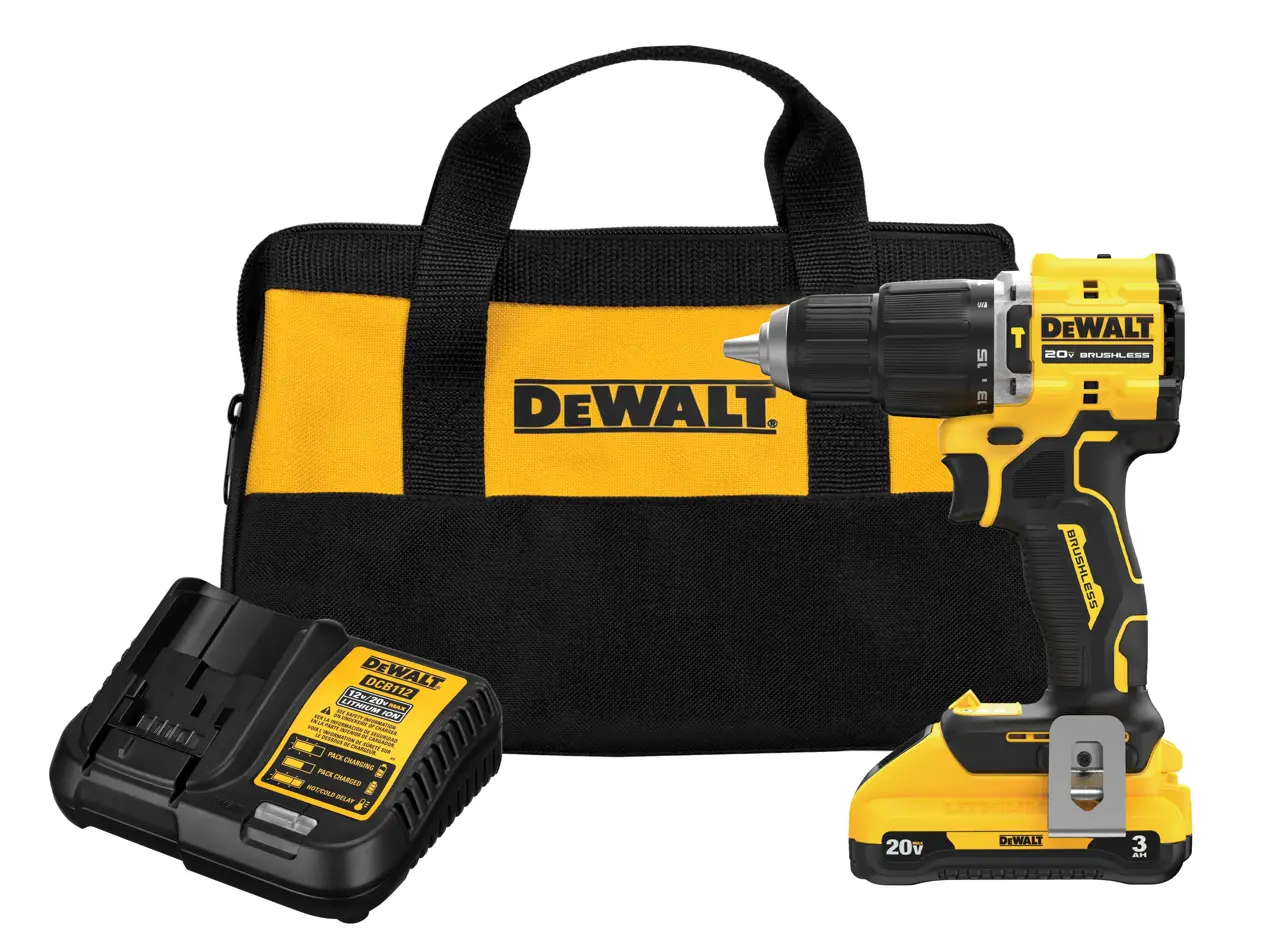
The DEWALT page lists a DCB230 3.0Ah battery, DCB112 charger, belt hook and kit bag for DCD799L1. DCD799D1 lists a smaller DCB203 2.0Ah battery with the same charger, hook and bag. Confirm the suffix on a seller’s listing.
Explore this need in the finder →Can DCD799L1 hammer-drill masonry?
Its model manual lists a hammer-drilling mode, making that a documented operating option. The sources reviewed do not provide a universal material or hole-diameter limit; check the instructions and bit choice for the actual work.
Explore this need in the finder →Should I infer performance from the DCD799L1’s 3.0Ah pack?
No. The page identifies a DCB230 3.0Ah battery in the box. Capacity is useful for comparing exact kit contents, but it is not a measured runtime or a guarantee of power under a particular load.
Explore this need in the finder →A middle-capacity DCD799 kit with a named charger and bag
The exact DCD799L1 configuration includes a DCD799 hammer drill, one DCB230 20V MAX 3.0Ah battery, a DCB112 charger, belt hook and kit bag, according to DEWALT’s page. That is the key decision point against its close siblings: DCD799D1 lists a DCB203 2.0Ah battery with the same named charger and bag; DCD799P1 lists a DCB205 5.0Ah battery but does not name its charger or list a bag; DCD799B is bare tool. The included battery’s amp-hour label helps identify the package, but the sources do not establish the runtime a buyer will see.
As a kit, L1 avoids treating a DCD799 bare tool as complete when no matching battery or charger is available. Someone with compatible DEWALT equipment may prefer to assess the B SKU or may have other reasons to want the separate battery; someone assembling a starter package can check whether the included 3.0Ah pack, charger and bag meet the actual need. Verify the suffix because the included components are materially different even though all four package names begin DCD799.
Why the manual distinction matters
DCD799L1 is built around the DCD799 tool, and the shared DCD794/DCD799 Type 1 manual documents three kinds of work: drilling, screwdriving positions 1–15 and hammer drilling. It shows two speeds and instructs the user to stop before selecting a different gear. The separate DCD794 drill/driver has no hammer mode in the same chart. So the L1 package is a meaningful fit to investigate when hammer action is essential, while an ordinary drill/driver may be the simpler match for work that does not call for it.
That is a mode distinction, not a blanket statement about what the machine can do in masonry. The reviewed sources do not establish one maximum hole diameter for every material, nor do they say it substitutes for a rotary/SDS tool in every concrete application. Follow the model manual and the accessory maker’s instructions for the material, bit, operation and clamping method. The manual also warns about sudden reaction if a bit binds, which matters when choosing grip and stabilizing the workpiece.
Claims, dimensions and known gaps
DEWALT describes the DCD799L1 with a 1/2-inch ratcheting chuck, up to 1,650 rpm and up to 28,050 beats per minute. It lists 552 UWO and a 6.49-inch tool-head length only, with the output claim conditioned on using a specified battery. These remain manufacturer claims rather than tests. Other pages for DCD799 packages show different UWO values and round head length to 6.5 inches; the discrepancy means we do not use a normalized family output or precise head-length number as a decisive comparison.
Even the page’s 6.49-inch figure is not total tool clearance. The battery extends below the grip; the installed bit extends ahead of the chuck; a hand and an approach angle need room. The 1/2-inch chuck is a shank-capacity measurement rather than an approved hole-size rating. And a 3.0Ah battery label cannot answer how many screws or holes a user will complete. These distinctions keep advertised specs from becoming unsupported promises.
Who should check this SKU?
DCD799L1 is worth comparing when the buyer wants documented hammer-drilling mode with a DEWALT 20V MAX battery and prefers the product page’s 3.0Ah DCB230, DCB112 charger, hook and bag package. If an existing compatible battery makes the kit unnecessary, compare DCD799B; if the 2.0Ah or 5.0Ah configuration is a better documented fit, read the D1 or P1 package review separately. The battery distinction alone does not prove that one package is lighter, more powerful or more efficient in use.
Before choosing a retailer, confirm the exact DCD799L1 suffix and the five named package items, check the included battery and charger against the manual, and verify current safety notices. Match the chuck to the shank of the planned bit and evaluate the actual space with battery and bit installed. This assessment is based on manufacturer pages and the manual only; no sample was purchased or operated, and no performance or dimensional measurement was made independently.
Key specifications
Key details at a glance
| Brushless motor | Yes |
|---|---|
| Maximum chuck capacity | 0.5 in |
| Maximum no-load speed | 1650 rpm |
| Screwdriving clutch settings | 15 |
| Battery platform | DEWALT 20V MAX |
| Exact package type | Kit: one 3.0Ah battery, charger and bag |
| Included battery model | DCB230 |
| Capacity per included battery | 3 Ah |
| Included charger model | DCB112 |
| Kit bag listed | Yes |
| Hammer-drilling mode | Yes |
| Documented operating modes | Drilling / Screwdriving / Hammer drilling |
| Battery included in this SKU | Yes |
| Charger included in this SKU | Yes |
| Included accessory | belt hook / kit bag |
Use the exact model’s instructions for operating limits, supplied equipment and version differences.
Sources for this review
Sources for this assessment
Compare your requirements before choosing
Use the finder to keep the essential job, battery system and exact package separate. The match is a research filter, not proof of fit or a live retailer offer.