
Your needs, this model
Does it fit your priorities?
What changes between DCD798P1 and the DCD798B tool-only SKU?
The documented drill is DCD798 in both. DCD798P1 adds one named DCB205 5.0Ah battery and one charger; the page does not identify the charger model in its Includes list. DCD798B lists the drill and belt hook only and says its battery and charger are sold separately.
Explore this need in the finder →Does the included DCB205 make the P1 a tested-runtime recommendation?
No. DCB205 is identified as a 5.0Ah DEWALT 20V MAX battery, but battery capacity alone does not establish runtime for a particular material, bit, hole or workload. No runtime test was performed here.
Explore this need in the finder →Can the P1 be classed as a six-inch-or-shorter head?
No. The product page states a 6.93-in tool-head measurement. It is not a full-clearance guarantee, and it exceeds the finder’s specific six-inch-or-less condition.
Explore this need in the finder →The DCD798P1 changes the package, not the drill mode chart
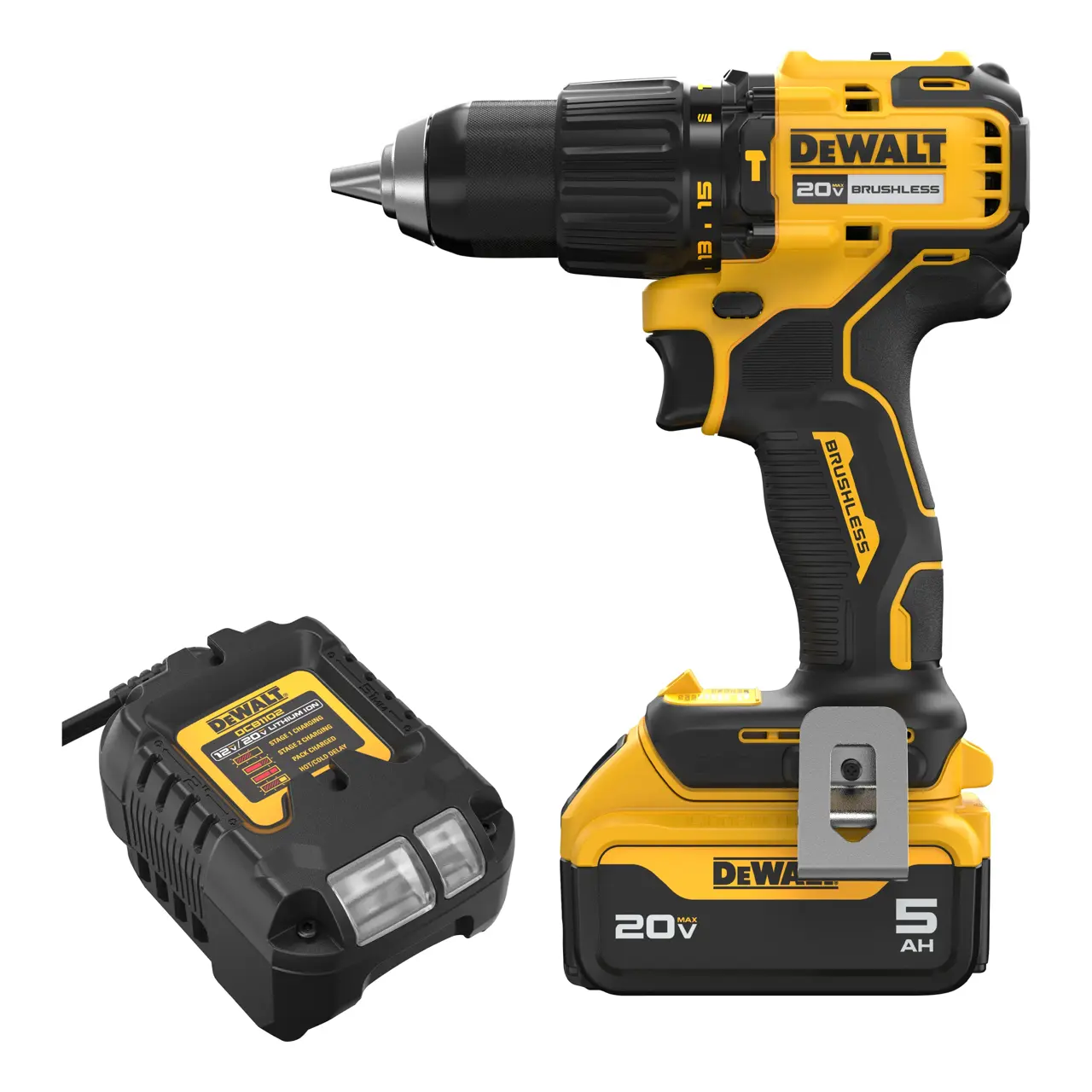
DCD798P1 is the kit version of DEWALT’s brushless 20V MAX DCD798 hammer drill. The exact US product page lists one DCD798 drill, a belt hook, one DCB205 battery and one charger. DEWALT’s separate DCB205 product page identifies that battery as 5.0Ah. The charger model is not named in the kit’s “Includes” bullets, so I would verify that detail against the exact seller package rather than assume a model from a neighboring product. Unlike the DCD798B bare-tool SKU, P1 brings the named battery and a charger; the available evidence does not document a different drill head or additional operating mode for P1.
This is a source-based assessment, not a hands-on test. The exact package image shows the drill with a 5Ah battery and charger, and its linked Type 1 North American manual covers the DCD798 model. The image and manual help answer different questions: the image bridges this exact kit SKU, while the manual explains the drill’s modes and operating cautions. Neither is evidence of measured runtime, drilling speed in a material or comfort over a shift.
Use the hammer function when the task calls for it
The manual’s model chart assigns DCD798 three mode families: drilling, screwdriving through collar positions 1–15, and hammer drilling. DCD798 is distinct from DCD793 in the same manual: DCD793’s chart lists drilling and screwdriving but not hammer drilling. The fifteen numbered positions are clutch settings for driving fasteners, not speed levels. The manual separately documents two transmission speeds and says to stop the tool before changing them; the inspected section does not give numeric gear-by-gear RPM ranges.
There is a handling consequence to mode selection. DEWALT warns that when the collar is in the drilling or hammer-drilling position, the tool will not clutch, so an overload can stall the drill and produce a sudden twist. Clamp or anchor the workpiece, keep a secure grip and use a bit intended for the selected mode. For masonry, the manual specifically calls for carbide-tipped or masonry bits rated for percussion. Its guidance does not establish that this drill is the right size or duty class for every concrete opening, and it gives no model-specific maximum hole-capacity table in the pages reviewed.
The exact product page describes a 1/2-in metal chuck, up to 1,650 rpm in drill mode and up to 28,050 beats per minute in hammer mode. These numbers are DEWALT’s claims, not independent results. A half-inch chuck accepts bit shanks up to its stated capacity; that does not mean the drill is approved to bore a half-inch hole through any material. A maximum RPM and impact rate also cannot tell you the right bit diameter, drilling technique, hole depth or expected runtime.
The included battery is useful information, not a runtime promise
DCB205 is a 5.0Ah DEWALT 20V MAX battery, and the DCD798P1 page lists one. That lets a buyer distinguish this package from the DCD798B and from kits with a different battery count or model. It does not support a claim about how many holes the battery will complete: workload, bit, material, charge state and user technique all affect use, and no such test was conducted here. The kit page includes a charger but does not identify its model in the package bullets. It also does not list a bag or case among its four named pieces, but I would confirm any carrying case or accessory expectation with the seller rather than infer one from another kit suffix.
DEWALT states a 6.93-in tool-head length and describes it as the head measurement only. That can help compare bare head dimensions, but it is not the full drill length with battery, chuck and bit, much less an access guarantee once a hand and approach angle are included. The stated figure is over the finder’s six-inch-or-less cutoff. Check the actual work area rather than treating a product-page head length as a clearance measurement.
Keep conflicting output copy out of the decision
The P1 overview says 404 UWO, while a feature line says up to 543 UWO, with that feature figure conditioned on the included DCB205 battery. The DCD798B page also carries conflicting 404/543 UWO wording. These are internal manufacturer-page inconsistencies for the DCD798 family. This assessment records the discrepancy but does not select one number, convert it to torque, rank the tool or treat either statement as a measured result. The page’s RPM and beats-per-minute claims remain manufacturer claims as well.
That restraint leaves more dependable buying checks: whether you need the documented hammer mode, whether your planned bits fit the chuck, whether the included DCB205 and charger suit your platform, and whether the stated head length works in your actual space. For ordinary screwdriving or drilling without masonry hammer mode, a drill/driver may avoid paying for a mode you do not need. For larger or more demanding masonry work, review the specific bit, hole and tool guidance rather than relying on “hammer drill” alone.
Verify the complete P1 package before ordering
Choose DCD798P1 when the one-battery kit contents are useful and the DCD798’s hammer-drilling mode is a documented match for the job. Compare it with DCD798B if you already own a compatible battery and charger; the B suffix is tool-only, while P1 adds the DCB205 battery and charger. Do not assume that P1 includes a bag, that its charger is a particular model, or that every seller’s listing has preserved the manufacturer package. Confirm the P1 label, battery model and included charger details at checkout, and read the current manual for bit selection and safe setup.
The package advantage is concrete but limited: one named 5Ah battery plus one charger. The review does not claim longer runtime, superior drilling, lower fatigue or better value at an unknown price. No personal ownership, tool use or testing is represented. Check current product and safety information before purchase.
Key specifications
Key details at a glance
| Brushless motor | Yes |
|---|---|
| Maximum chuck capacity | 0.5 in |
| Manufacturer-stated tool-head length | 6.93 in |
| Maximum no-load speed | 1650 rpm |
| Screwdriving clutch settings | 15 |
| Battery platform | DEWALT 20V MAX |
| Exact package type | Dcd798p1 kit: one dcd798 brushless 1/2-in hammer drill, belt hook, one dcb205 20v max 5.0ah battery and one charger; the exact charger model is not named in the page's package list |
| Included battery model | DCB205 |
| Capacity per included battery | 5 Ah |
| Hammer-drilling mode | Yes |
| Documented operating modes | Drilling / Screwdriving / Hammer drilling |
| Battery included in this SKU | Yes |
| Charger included in this SKU | Yes |
| Included accessory | belt hook / one DCB205 5.0Ah battery / one charger (model not stated in package list) |
Use the exact model’s instructions for operating limits, supplied equipment and version differences.
Sources for this review
Sources for this assessment
Compare your requirements before choosing
Use the finder to keep the essential job, battery system and exact package separate. The match is a research filter, not proof of fit or a live retailer offer.