
Your needs, this model
Does it fit your priorities?
Does the DCD798B package include power equipment?
No. The exact DCD798B page lists the DCD798 drill and belt hook and identifies this as tool only; its page states that battery and charger are sold separately. The structured case field says no case is included.
Explore this need in the finder →What does the DCD798 manual document beyond ordinary drill/driver use?
The Type 1 manual lists drilling, screwdriving with 1-15 clutch positions and a hammer-drilling mode for DCD798. It distinguishes this from the DCD793 drill/driver in the same manual. In drill and hammer positions the clutch does not protect against an overload stall, so the manual warns about sudden twist and secure handling.
Explore this need in the finder →Can the DCD798B be counted as a six-inch-or-shorter head?
No. DEWALT states 6.93 in for tool-head length only. That is not a full tool-with-bit clearance measure, but it is also over the finder’s six-inch-or-less threshold; a close-clearance claim should not be inferred.
Explore this need in the finder →The central question is whether hammer mode belongs in your work
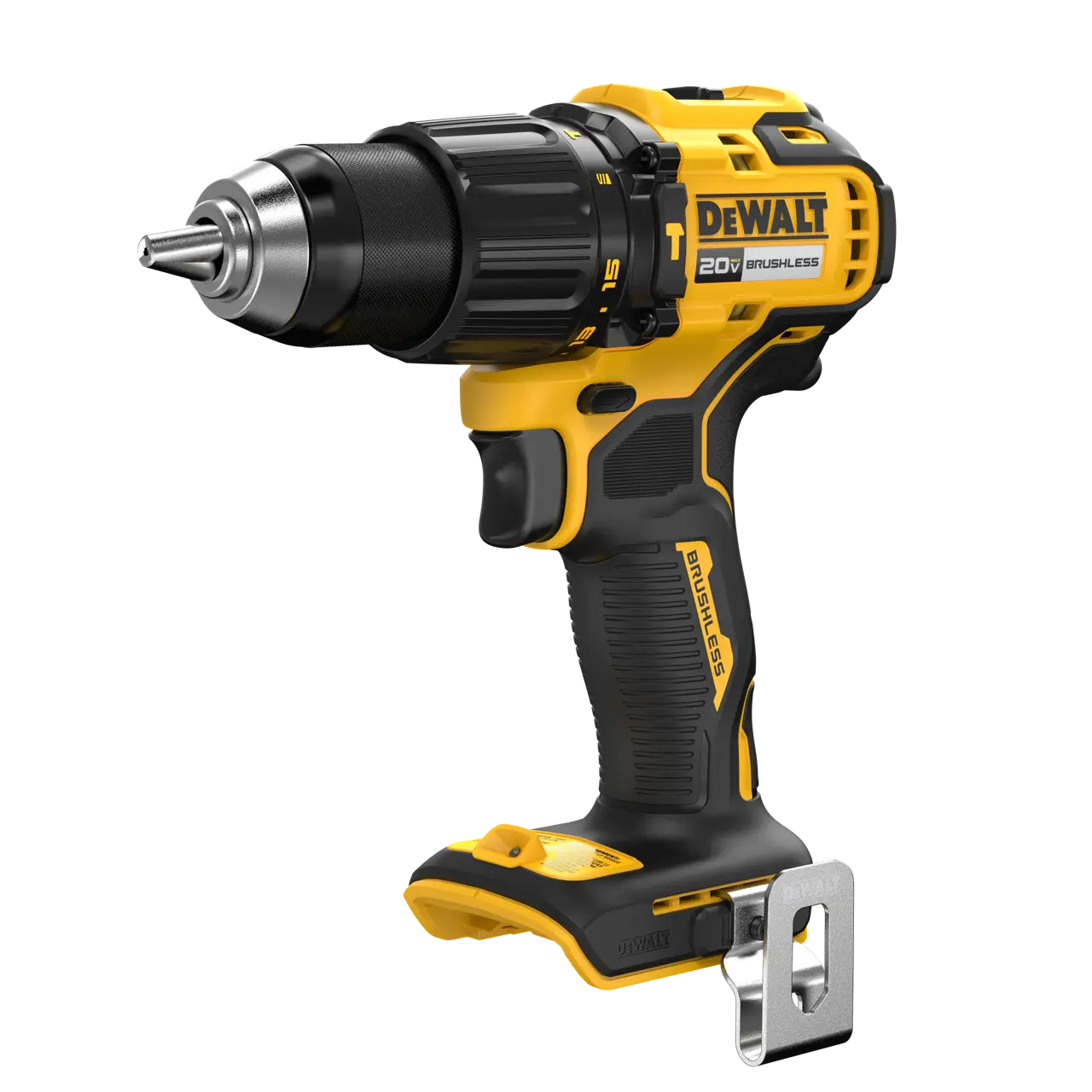
The DCD798B is DEWALT’s brushless 20V MAX 1/2-in hammer drill sold as a tool-only package. That label matters twice: the Type 1 manual documents a hammer-drilling mode in addition to ordinary drilling and screwdriving, while the exact B-suffix package does not include a battery or charger. It is therefore a plausible match for someone who needs that extra mode and already owns compatible 20V MAX power equipment, but a poor “open the box and start” choice if a complete power setup is still needed.
This is a document-based review of the exact US SKU, not a hands-on test. The maker’s page and linked manual are more useful here than generic claims about what any 1/2-in drill can do: the model is explicitly called DCD798, the product record identifies a brushless motor and keyless metal chuck, and the manual’s mode chart assigns DCD798 drilling, 1–15 screwdriving positions and hammer drilling. The chart is model-specific; it is not a reason to assume another drill in the same family has the same mode set.
Mode and clutch behavior are the practical differentiators
The manual says the tool has two speed settings and cautions users to let it stop fully before changing gears. It does not publish numeric low- and high-gear ranges in the section reviewed. The fifteen numbered collar positions are screwdriving clutch settings, not extra gears. DEWALT also warns that the drill does not clutch when the collar is set to drilling or hammer drilling, and an overload stall can twist the tool suddenly. That is a meaningful setup and handling limit: select the correct mode and bit, keep the workpiece secured, hold the tool firmly and avoid treating a clutch number as overload protection while drilling.
For masonry, the instructions call for carbide-tipped or masonry bits rated for percussion. The manual’s technique notes emphasize controlled pressure and keeping the bit aligned; excessive force can slow the work, heat the bit and reduce the rate of progress. These cautions make the hammer setting a specific capability, not a promise that the drill will make every hole in concrete quickly or cleanly. The documents reviewed provide no DCD798 material-by-material maximum hole table, and this page does not supply one by extrapolating from another drill.
The exact product page states a 1/2-in metal chuck, up to 1,650 rpm in drill mode and up to 28,050 beats per minute in hammer mode. Those are manufacturer claims, not measurements from this review. Chuck capacity describes the shank size the chuck can accept; it is not a 1/2-in hole-size rating. Likewise, maximum speed and impact rate alone do not establish a suitable bit, hole diameter, material, runtime or drilling time.
A short head still needs a real clearance check
DEWALT gives a 6.93-in tool-head measurement and calls it “tool head length only,” with a separate comparison that it is more than an inch shorter than DCD778. This is the appropriate narrow use of that number: it describes the manufacturer’s stated head length, not the complete working envelope. A battery extends below the handle, the bit projects past the chuck, and a hand, wrist and approach angle also need room. Measure the actual space with the intended battery, bit and grip in mind. The 6.93-in value is not a six-inch-or-less compact-head claim, and it cannot certify access around a cabinet, joist or pipe.
What the B suffix buys—and what it leaves out
The product page lists the DCD798 drill and a belt hook; its structured properties say tool only, zero batteries, no charger and no case. There is no battery capacity to compare in this package. The page’s output copy is also inconsistent: it states 543 UWO in the overview and features, conditioned on a DCB203 battery sold separately, while an image description on the same page refers to a graphic showing 404 UWO. Rather than turn either figure into a settled rating, this review leaves the output field unknown. No torque, runtime, comfort, vibration or durability test was carried out.
Before choosing it, confirm that DCD798B—not DCD798P1 or another nearby SKU—is printed on the offered package. Check that your battery and charger are compatible with the maker’s 20V MAX platform and are already available. If you want a kit, compare the exact included battery and charger rather than assuming a neighboring suffix adds particular equipment. A seller’s package can differ from a manufacturer page, so verify the current list before ordering.
Who should compare it, and who should keep looking
Compare the DCD798B if hammer drilling is a real requirement, a 1/2-in chuck suits your bit shanks, and you already have the right battery platform. It is less compelling for someone who only needs routine fastening or drilling and would rather not pay for an unused mode; a standard drill/driver may be a simpler fit. For concrete jobs, read the bit and fastener makers’ instructions and the drill manual, and consider whether your material, hole size and duty call for a different tool class. This assessment does not certify suitability for heavy rotary-hammer work.
The strongest reasons to shortlist the DCD798B are the specific operating modes and the platform fit, not a headline output figure. Its drawbacks are the bare-tool purchase boundary, a head-length number that does not resolve real-world clearance, and conflicting UWO claims. No hands-on use or performance testing is claimed. Recheck the exact SKU, supplied contents and current safety notices before purchase.
Key specifications
Key details at a glance
| Brushless motor | Yes |
|---|---|
| Maximum chuck capacity | 0.5 in |
| Manufacturer-stated tool-head length | 6.93 in |
| Maximum no-load speed | 1650 rpm |
| Screwdriving clutch settings | 15 |
| Battery platform | DEWALT 20V MAX |
| Exact package type | Dcd798b tool-only: one dcd798 brushless 1/2-in hammer drill and belt hook; battery and charger sold separately; the structured product page says no case is included |
| Kit bag listed | No |
| Hammer-drilling mode | Yes |
| Documented operating modes | Drilling / Screwdriving / Hammer drilling |
| Battery included in this SKU | No |
| Charger included in this SKU | No |
| Included accessory | belt hook |
Use the exact model’s instructions for operating limits, supplied equipment and version differences.
Sources for this review
Sources for this assessment
Compare your requirements before choosing
Use the finder to keep the essential job, battery system and exact package separate. The match is a research filter, not proof of fit or a live retailer offer.