
Your needs, this model
Does it fit your priorities?
What is the documented difference between DCD1007BLR and other DCD1007 suffixes?
The exact BLR page explicitly identifies a LANYARD READY attachment point and lists the tool, side handle and belt hook as a tool-only package. DCD1007B and DCD1007WW1 are separate SKUs; do not assume their package contents or tether hardware from the family name.
Explore this need in the finder →Can the included belt hook be used as the BLR tether point?
No. The manual says the belt hook is for hanging the tool from a work belt and must not be used for tethering. The product page separately calls out LANYARD READY hardware; confirm the compatible lanyard and the jobsite procedure.
Explore this need in the finder →Does the BLR package include a battery and charger?
No. The exact page says the battery and charger are sold separately. It lists the DCD1007 drill with LANYARD READY point, a side handle and a belt hook.
Explore this need in the finder →Bottom line: DCD1007BLR is the tool-only DCD1007 hammer drill with an expressly advertised LANYARD READY attachment point. The suffix is meaningful if a lanyard attachment is part of the work plan; it does not turn the included belt hook into a tether point, add a battery, or make the tool a fall-protection system. This assessment uses manufacturer documentation, not a hands-on test.
The BLR difference is specific
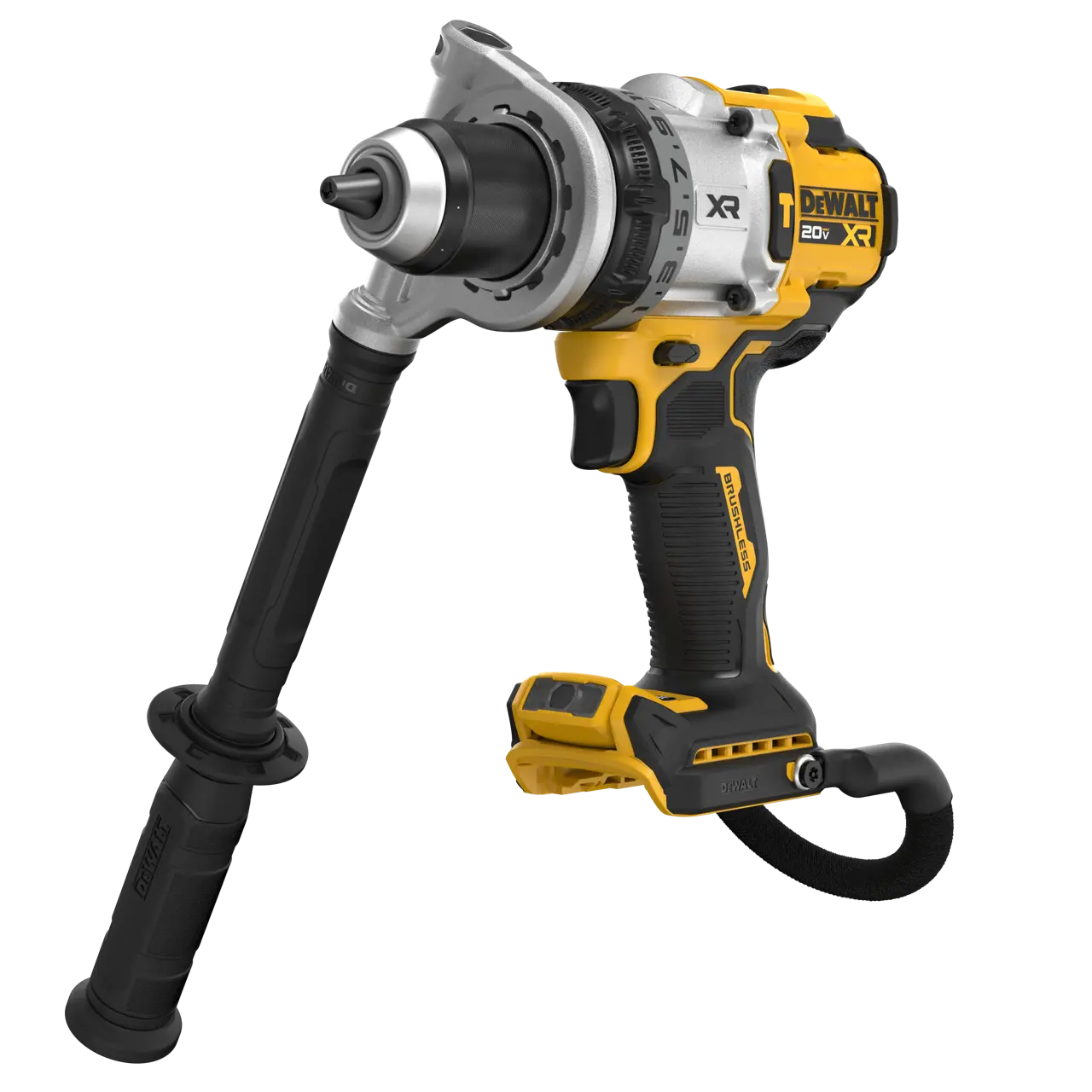
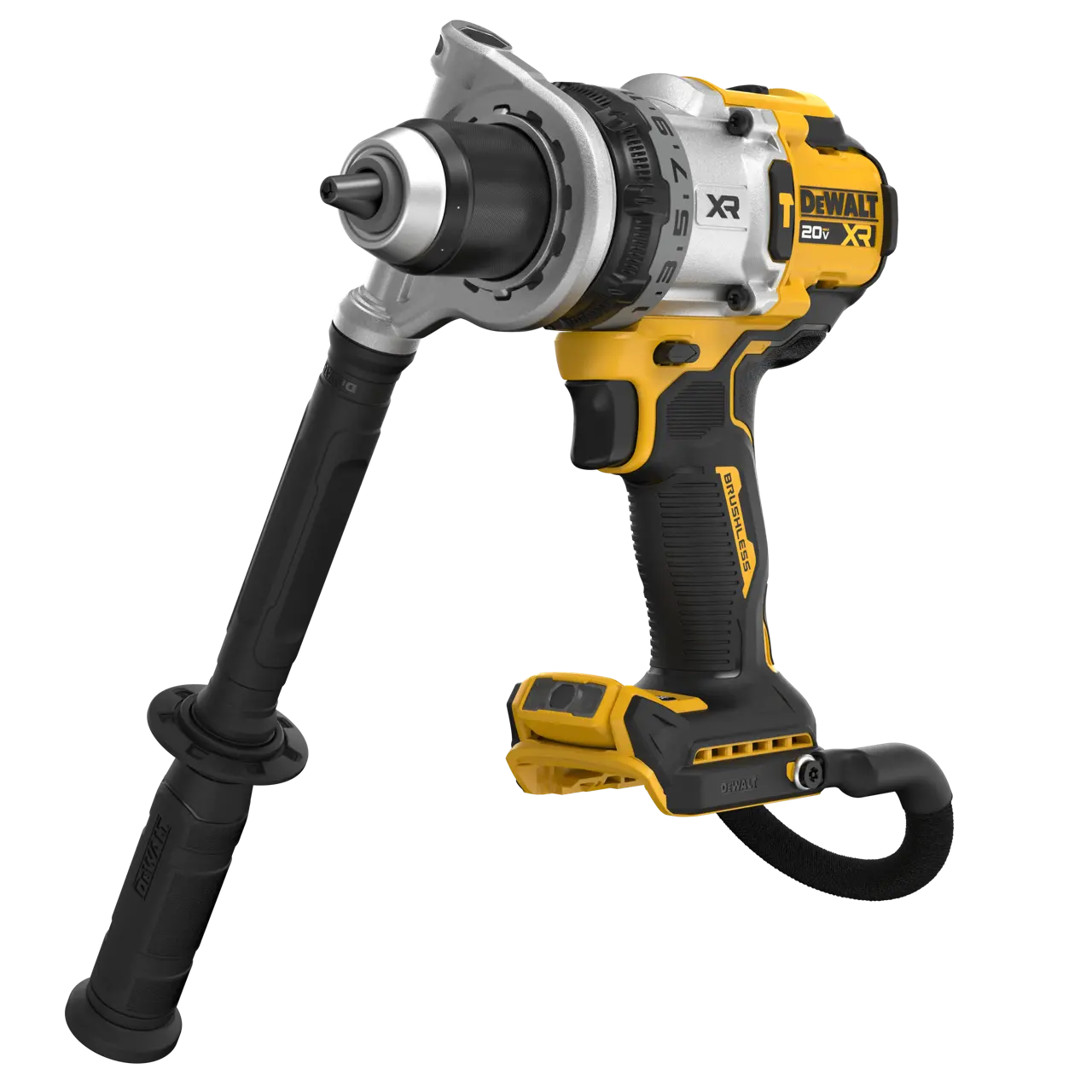
DEWALT’s exact US page describes the tool as a brushless 20V MAX XR 1/2-inch, three-speed hammer drill and says the LANYARD READY point is intended to tether the tool to a rigid structure when working at height. Its Includes list names the DCD1007 with that attachment point, a side handle and a belt hook; the page says the battery and charger are sold separately. The exact studio image shows the tool-only configuration and the distinct attachment point at the base. The image helps identify the SKU, but the written page establishes the package contents.
DCD1007B is another tool-only listing without the LANYARD READY wording; DCD1007WW1 is the kit with one 8Ah DCB2108 battery and a charger. These are not interchangeable package names. The underlying DCD1007 family has the same documented three-speed drilling, screwdriving and hammer-drilling plan; BLR’s source-supported distinction is the tether-ready hardware. The manual’s belt-hook section warns against using the belt hook to tether or secure the tool. Treat those as different attachment functions and verify that the actual tether, tool connection and site procedure are appropriate before use.
Operating modes and handling
The exact product page lists a keyless 1/2-inch ratcheting nitro-carburized metal chuck with carbide inserts, a brushless motor, an all-metal three-speed transmission, a pivoting three-position light, and an ANTI-ROTATION system that shuts the tool down if excessive rotation is sensed. The page also describes the system’s red indicator. The Type 1 manual assigns this DCD1007 machine ordinary drilling, screwdriving at collar positions 1–11, and hammer drilling. It says to stop the motor before changing gears and warns that the clutch does not operate in drilling or hammer mode; an overload may therefore produce a sudden twist. DEWALT directs the user to install and properly hold the side handle, anchor the workpiece, and use a percussion-rated carbide or masonry bit for hammer drilling.
The manual’s recommended-capacity table lists up to 1-1/2-inch wood auger or paddle bits, 1-inch wood twist bits, 3-5/8-inch self-feed bits, and 5-inch hole saws; it lists different limits for sheet metal, plate steel and masonry. Those are manufacturer recommendations by bit type, not our tested hole sizes or a promise for every material. The 1/2-inch chuck is about supported shank size, not a universal hole-capacity rating. This is a powerful general drill/driver with a hammer setting, not an SDS tool for sustained heavy concrete work.
Lanyard Ready is not an all-purpose safety claim
The BLR page says its attachment point is intended to help secure a dropped tool when tethered to a rigid jobsite structure. That is a useful differentiator where tethering is required, but the product page does not specify a complete work-at-height system for every user, drop distance or attachment. Confirm the compatible lanyard and the maker’s instructions for the tool and tether, and follow the site’s own procedures. Do not attach the tether to the belt hook: the manual explicitly distinguishes the belt hook as a work-belt hanger and warns not to use it for tethering. Nothing here is a claim of personal use or of independent safety testing.
Battery, fit and performance limits
Because this exact BLR SKU is tool-only, an existing 20V MAX battery can make it an easier addition to a platform you already own, but a newcomer must account for a compatible battery and charger separately. The included side handle is more than a storage accessory on a high-torque machine: use it as directed for control. If you want a ready-to-work package with a listed battery and charger, compare the WW1 suffix instead. Its page lists a DCB2108 8Ah pack; that larger pack is not included with the BLR.
DEWALT advertises up to 2,100 in-lb maximum brake torque and up to 275 holes per charge, but the hole-count example is conditioned on the DCB2108 battery, a 7/8-inch auger and 1-1/2-inch fir. It is not a runtime estimate for the tool-only BLR with an arbitrary pack. Manufacturer structured speed fields also vary across DCD1007 suffix pages, while the shared manual gives the number of gears but not numeric ranges, so this review does not choose an RPM figure. No exact operating weight or tool-head clearance is established by the package’s assembled-product data. Try the actual battery, bit and grip in the intended work area before treating it as compact enough for a tight access job.
Shortlist decision
Choose this exact suffix for the combination of documented hammer-drill capability and a purpose-built tether-ready point, provided you already have a compatible 20V MAX battery and charger. Choose the standard B if that tether feature is not needed, or the WW1 kit if an included 8Ah battery and charger are more important. Check the current package label, appropriate tether, intended bit and the manual’s clutch and handling limits before purchase. The BLR’s strongest case is not a generalized superiority claim; it is a discrete attachment feature that may matter on a specific jobsite.
Sources: DEWALT DCD1007BLR product page and its Type 1 North American manual.
Key specifications
Key details at a glance
| Brushless motor | Yes |
|---|---|
| Maximum chuck capacity | 0.5 in |
| Screwdriving clutch settings | 11 |
| Battery platform | DEWALT 20V MAX |
| Exact package type | Dcd1007blr tool-only package: dcd1007 drill with lanyard ready point, side handle and belt hook; battery and charger sold separately |
| Hammer-drilling mode | Yes |
| Documented operating modes | Drilling / Screwdriving / Hammer drilling |
| Battery included in this SKU | No |
| Charger included in this SKU | No |
| Included accessory | side handle / belt hook |
Use the exact model’s instructions for operating limits, supplied equipment and version differences.
Sources for this review
Sources for this assessment
- DEWALT DCD1007BLR 20V MAX XR three-speed hammer drill with LANYARD READY product page
- DEWALT DCD1007 Type 1 North American instruction manual linked by the exact US product page
- DEWALT US hammer-drill category listing
- DEWALT US safety notices and recalls index
- Official DCD1007BLR exact-SKU product image
Compare your requirements before choosing
Use the finder to keep the essential job, battery system and exact package separate. The match is a research filter, not proof of fit or a live retailer offer.